
Red Light Therapy Centennial, CO
- Non-Invasive Light Therapy
- Supports Cellular Recovery
- No Downtime
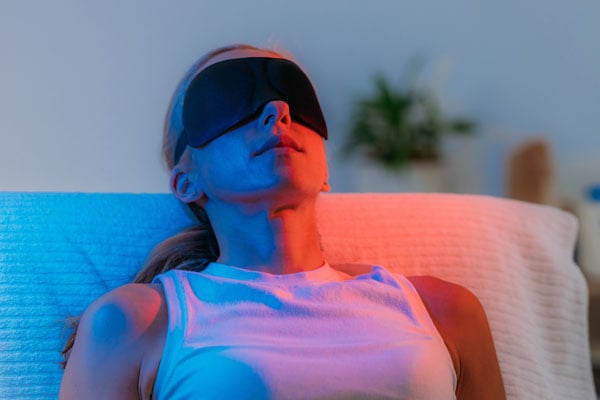
Red light therapy uses specific wavelengths of light to deliver more blood to any damaged tissue. It brings more oxygen and nutrients required for healing. Here at Axis Health and Wellness in Centennial, Dr. Tony Nicholas offers this therapy to treat inflammation, which is common in our chiropractic office.
It works well for a swollen knee, a tendon that won’t calm down, and a nerve that stays angry for a long time. The treatment can run between 30 and 60 seconds per area.
Red light therapy addresses those conditions without drugs. Many of our patients are surprised at how fast the session is. Despite the name, you won’t notice the “heat”. It’s also not invasive. This is also one of the three legs of Dr. Tony’s neuropathy protocol.
What Red Light Therapy Is
Red light therapy targets inflammation using wavelengths in the red and near-infrared range. Different wavelengths do behave differently when they meet tissue. But red light passes through skin, instead of stopping at it. Thus, the energy goes to the problem where it actually lives.
The clinical name for this process is photobiomodulation. It’s also called low-level light therapy, cold laser, or infrared therapy. The terms are used loosely. Red wavelengths work closer to the surface. It goes deeper when it’s in the infrared range.
Regardless of what it’s called, the goal is the same. That is, put usable energy into struggling tissue, and it gives the body more of what it needs to repair itself. This fits the philosophy of Dr. Tony in our Centennial office. The body has a natural way to heal itself if you give it the right means to grow and repair.
What the Light is Actually Doing?
It Gets Absorbed by Your Cells
The mitochondria, which is the part of your cells that produces energy, takes up these red wavelengths. This absorption supports cellular energy production. Simply put, it gives your tired tissue a little more capacity to perform its job.
It Increases Blood Flow
This is the one that matters most for the patients that we treat. The light increases blood flow to deliver more oxygen and nutrients to the damaged tissues. Damaged and inflamed tissues get a poor supply. By improving blood flow, a large part of that inflammation settles.
Red Light Therapy for Neuropathy
Neuropathy is a progressive disease that affects the nerves. When these nerves get damaged, they start to die, causing numbness, burning, and tingling sensations that worsen without treatment. This is common in patients with diabetes.
Dr. Tony treats neuropathy with a three-pronged approach. One of them is light.
- Electrical stimulation to retrain the nerves to function properly.
- Infrared or red light therapy to improve blood flow to the damaged tissues so that nerves get the right nutrients for regeneration.
- Nutrition to supply the nerves with enough nutrients for healing. It matters more for diabetics.
SoftWave therapy is often used along with this approach to activate healing in the area.
Most of this Happens at Your House
Roughly 90 percent of the treatment is done at home. This means that we perform SoftWave and muscle stimulation in the office. But the daily work is yours. You must do as much as you can at home to produce better results over the long run. When it comes to neuropathy, consistency is the key. No one gets better on two office visits a week alone. You need to follow the nutritional guidelines provided by Dr. Tony.
What We Use It For
You can be a good candidate if you have an inflammatory condition. Inflammation shows up under various names:
- Neuropathy and nerve pain
- Shoulder inflammation
- Plantar fasciitis and heel inflammation
- Numbness and tingling
- Inflamed and arthritic knees
- Tendon irritation
- Low back inflammation
- Post-injury swelling
Red light also works with adjustment, shockwave therapy, and the rest of your plan because inflammation is a symptom of a condition that needs addressing.
What a Red Light Therapy Session is Like
The TheraRay is a small, compact unit that is placed over the area. Each area takes around 30 to 60 seconds. That’s it. It’s so short that first-time patients ask whether it was really it.
You may feel some mild warmth, but you feel very little. There’s no recovery time, and you leave the office with no restrictions. Multiple areas can be treated in one session.
“It is a short, very small, compact unit called the TheraRay that we can get great results with in just 30 to 60 seconds on each area. There are really no contraindications for it. Nobody necessarily has to skip it.”
Dr. Tony Nicholas, D.C.Safety and Who Should Skip It
Red light therapy is low risk. There’s no UV in it. It’s not hot, so it won’t burn or tan your skin. There are no contraindications. No patient has to skip it. But you need to keep these things in mind during treatment:
- Don’t stare directly into the light source. Although the light is safe, the wavelengths are bad for your eyes.
- Make sure to mention the medicines you take that cause light sensitivity.
- If you’re pregnant, you should tell Dr. Tony so he can plan around it.
- And if your problem started with a certain trauma, make sure to get imaging or an X-ray first to rule out a fracture or a tear.
What Does Red Light Therapy Cost?
Red light therapy is usually a part of a treatment plan. Thus, its cost is included in your overall plan, instead of standalone care.
Here at Axis Health and Wellness, we provide our patients with options ranging from conservative to most intensive. You choose whatever fits your wallet. We accept all insurance except Medicaid. We also take HSA and FSA cards, CareCredit, Cherry, cash, and credit cards. Our chiropractic office also offers payment plans with no-interest options. You can start with a $29 new patient exam to find out what’s going on with you. To know more about our payment options, please check out our payment plans page here.
Red Light Therapy FAQs
Is red light therapy the same as infrared therapy?
Red light therapy and infrared therapy are related, and they are used interchangeably. Red wavelengths are visible. They work closer to the surface. Near-infrared is invisible and penetrates deeper. Most devices deliver both. This is the reason you hear the same treatment called red light therapy, infrared therapy, low-level light therapy, or photobiomodulation.
How long is a red light therapy session?
With the TheraRay unit, the red light therapy session can last between 30 and 60 seconds per area. This unit is a compact device that Dr. Tony places over the treated area, so several areas can be covered quickly. There’s no recovery time and no restrictions after each session.
Does red light therapy hurt or burn?
No. Red light therapy doesn’t hurt or burn. In fact, most people feel very light. You may feel some mild warmth. But there’s no UV involved, so the light won’t burn or tan your skin. It’s also non-invasive.
Is red light therapy the same as a tanning bed?
Not entirely. Tanning beds emit ultraviolet light that damages skin. Red and near-infrared light sit at the opposite end of the spectrum. They don’t contain UV at all. They also use different wavelengths and provide different effects and purposes.
Are there contraindications for red light therapy?
There are no contraindications for red light therapy. For Dr. Tony, no one necessarily has to skip it. It’s one of the lowest-risk treatments offered at Axis Health and Wellness.
But we do ask you not to look directly into the light. You also have to tell us if you’re taking medication that makes you light-sensitive and if you’re pregnant, so Dr. Tony can plan accordingly.
Can red light therapy help diabetic neuropathy?
Red light therapy is one of the three parts of the neuropathy protocol here. Most diabetic patients have neuropathy. The entire therapy aims to boost blood flow so the nerves in the affected area get the nutrients they need to regenerate. This therapy also works along with electrical stimulation to retrain nerve firing and a nutrition plan designed for this case.
This condition is progressive. It means that the nerves get damaged. They slowly die. The entire therapy changes that trajectory, instead of masking your symptoms.
Can I do red light therapy at home?
This is the plan. About 90 percent of neuropathy treatment happens at home with SoftWave, and muscle stimulation is performed at our chiropractic office. Consistency is the key to making neuropathy work. You must do as much as you can to follow the nutrition plan to obtain great results. No amount of office visits can replace it.
How soon will I notice a difference?
It depends on the severity of your condition. Straightforward inflammation responds faster than nerve damage. Nerve conditions are measured in months of consistent work, instead of in sessions.
As you undergo treatment here, your condition is re-evaluated per week. Thus, your plan can change, instead of being fixed on day one. If something is not working, Dr. Tony will tell you, rather than forcing you to keep going.
Find Out Whether Light Belongs in Your Plan
Red light works best as part of a plan built around what is actually wrong, so it starts with an exam. Dr. Tony will examine you, take x-rays where they are called for, and tell you honestly what your situation needs. Axis Health and Wellness has served Centennial, Greenwood Village, Lone Tree, Highlands Ranch, Littleton, Aurora, Parker, Castle Rock, and the south Denver metro since 1997.